

The Agentic Pivot
Why "Open Claw" and the Rise of AI Agents are Redefining the Digital Economy

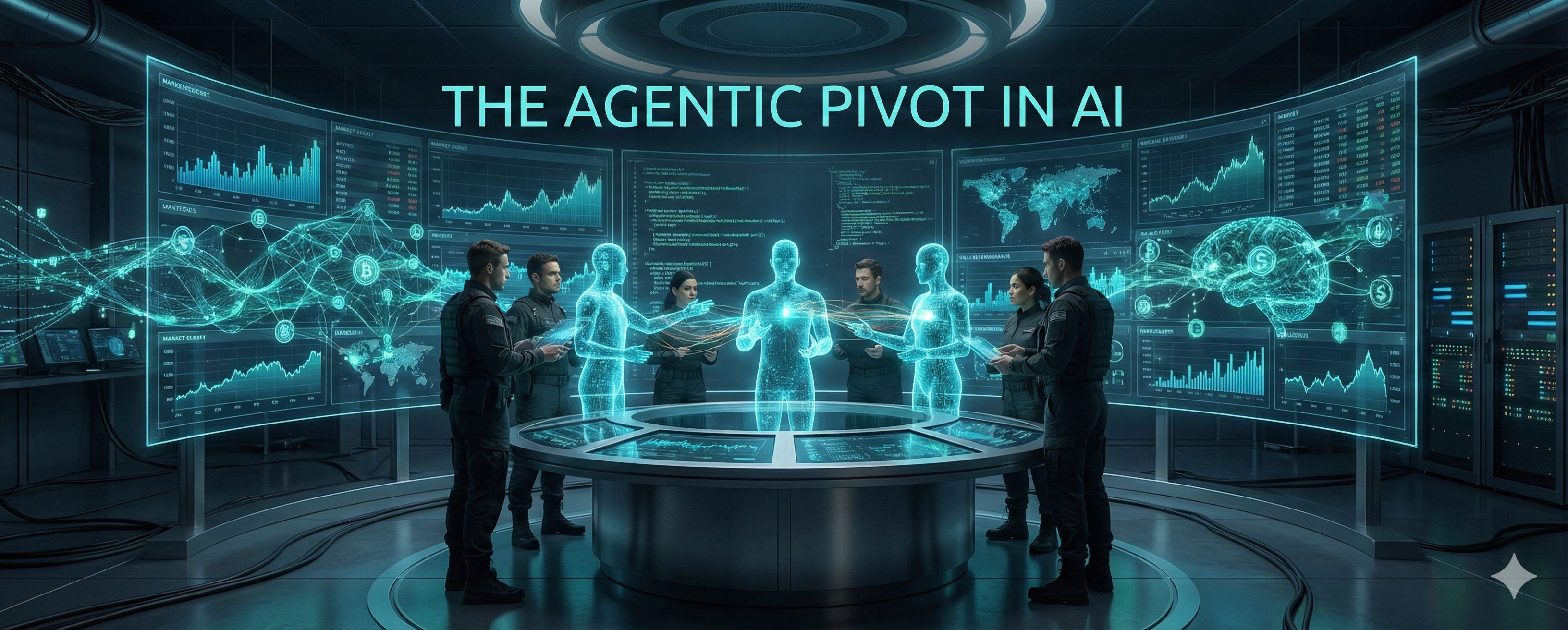
The recent volatility in global tech markets—marked by what many are now calling the “AI Scare Trade”—is not merely a random correction. It is the first seismic tremor of a fundamental shift in the artificial intelligence paradigm. While the general public is still enamored with chatbots that answer questions, the “smart money” and the engineering elite have moved on to a far more potent and disruptive force: Autonomous Agents.
The emergence of systems like Open Claw marks the end of the “Chatbot Era” and the beginning of the “Agentic Era.” We are moving from AI that talks to AI that does.
From Generative to Agentic: The New Frontier
For the past year, AI was primarily viewed as a sophisticated interface—a tool to generate text or images. However, the release of Open Claw, an open-source framework capable of operating computers independently, has shattered that limitation.
Unlike traditional LLMs (Large Language Models), Agentic AI possesses the ability to:
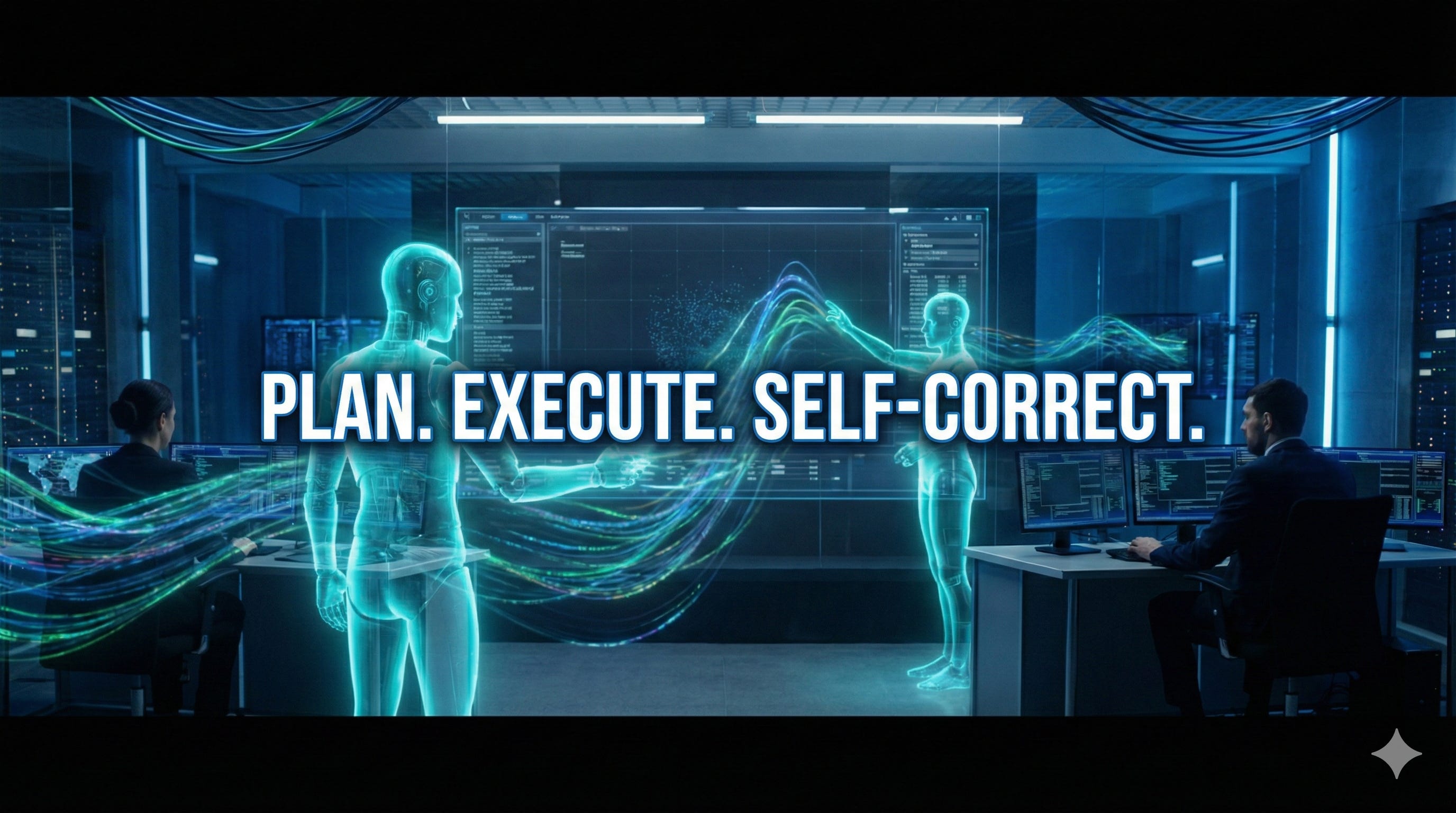
Plan and Decompose: Break a complex goal (e.g., “Build a functional e-commerce site”) into actionable steps.
Execute: Interact with browsers, databases, and terminals to perform tasks.
Self-Correct: Identify errors in its own code or logic and iterate until the goal is achieved.
This shift represents a transition from human-led workflows assisted by AI to AI-led workflows supervised by humans. The “human-in-the-loop” is increasingly moving from a creative lead to a strategic auditor.
The Industrialization of Software Development
The most immediate impact is visible in software engineering. We are witnessing a “Renaissance” where code is no longer just written by humans, but managed by them. Companies are already deploying “agentic coding” workflows where autonomous “minions” handle the bulk of development, testing, and debugging.
The productivity gains are staggering. Projects that previously required dozens of engineers over several months are now being compressed into weeks with a fraction of the staff. However, this efficiency comes with a silent cost: the erosion of the open-source discussion culture and a potential decline in code quality. As agents generate mountains of software, the “knowledge debt” grows, and the risk of overlooked security vulnerabilities—often referred to as “Agent-Skills” risks—becomes a systemic threat.
The Infrastructure Paradox and the Capital Explosion
Despite the market’s recent jitters, the “Hyperscalers” (Alphabet, Amazon, Microsoft) are doubling down on capital expenditure. This is not irrational exuberance; it is a calculated response to the technical demands of Agentic AI.
While a chatbot response takes milliseconds of compute, an autonomous agent may run for minutes or hours, simulating various solutions and processing vast amounts of telemetry data. The inference costs and energy requirements for agents are exponentially higher than for simple text generation. This creates a massive, inelastic demand for high-end silicon and data center capacity, regardless of how the software layer settles.
The Inversion of Human-Machine Relations
Perhaps the most profound shift is sociological. We are seeing the birth of platforms where AI agents actually “hire” humans to perform tasks in the physical world—a complete reversal of the traditional labor hierarchy.
Furthermore, as agents begin to interact in closed ecosystems, we are observing the emergence of autonomous digital economies. In these environments, agents trade, negotiate, and even simulate social structures. While this currently remains experimental, the legal and ethical implications are immediate. Under current frameworks, such as the GDPR (Article 22), the autonomy of these agents is strictly curtailed in Europe to prevent unmonitored automated decision-making. Yet, the speed of adoption in the corporate world is outstripping the pace of regulatory oversight.
The “Ternary Threat”: Security in an Agentic World
Security experts point to a “deadly trinity” inherent in systems like Open Claw:
Access to sensitive data.
The ability to communicate externally.
The processing of untrusted content.
Through techniques like Prompt Injection, an autonomous agent can be hijacked to leak corporate secrets or execute malicious scripts. The very autonomy that makes them valuable also makes them a “black box” of potential liability. For the modern enterprise, the question is no longer whether to adopt AI, but where to draw the hard line between machine autonomy and human safety.
Conclusion: Navigating the Disruption
The “AI Scare Trade” reflects a growing realization that the software sector is facing a period of unprecedented disruption. Traditional business models built on “per-seat” licensing or human-centric service delivery are being hollowed out by agentic automation.
In this environment of high uncertainty at the application layer, the only certainty is the demand for the physical substrate that makes this evolution possible. While the software winners and losers are still fighting in the trenches, the hardware remains the ultimate gatekeeper. For this reason, I have positioned my portfolio heavily in AI Hardware ($OSS). As the world transitions from software that assists to software that acts, the need for the underlying processing power will remain the most reliable bet in an increasingly unpredictable digital landscape.
This is not financial advice; the author holds a long position in $OSS and encourages independent due diligence.